
Best Rust Programming Books in October 2026
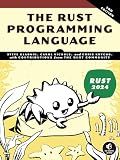
The Rust Programming Language, 3rd Edition


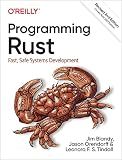
Programming Rust: Fast, Safe Systems Development
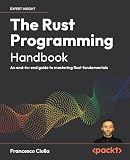
The Rust Programming Handbook: An end-to-end guide to mastering Rust fundamentals
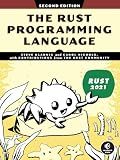
The Rust Programming Language, 2nd Edition
Rust for Rustaceans: Idiomatic Programming for Experienced Developers
Rust Atomics and Locks: Low-Level Concurrency in Practice
Rust in Action
Unlocking New Levels: How to Implement Sorting in Rust: Guide in 2026
Programming languages come and go, but Rust has continued to capture the hearts of developers worldwide. How to implement sorting in Rust: Guide in 2026? It's not just a technical query; it's a key to unlocking a powerful, efficient, and safe way to handle data manipulation. With Rust, you marry performance with safety, all while gracefully stepping into 2026's ever-evolving tech landscape.
Sorting is a fundamental operation for any software dealing with data. Whether you're building a simple application or architecting a complex system, understanding sorting algorithms in Rust is crucial. But what makes this knowledge imperative in 2026? Simply put, as databases become larger and processing needs more precise, implementing efficient sorting is non-negotiable. This guide promises to equip you with the skills to execute sorting in Rust - a language that Forbes recently deemed indispensable for future-proof developers eager to optimize their applications.
Ready to dive in? You’ll discover the nuances of sorting in Rust, explore essential features, and receive expert tips to ensure you're coding like a pro. Let’s get started!
What You Should Know About Sorting in Rust
Before diving headfirst into coding, step back and consider what comes under the hood when implementing sorting in Rust. Here are key aspects you need to watch for:
-
Memory Safety: Rust prides itself on zero-cost abstractions without the expense of memory safety. Sorting algorithms must adhere to this principle by ensuring no data races occur during execution.
-
Performance: Rust is known for its speed, and you'll want to maintain this when implementing sorting. Efficient algorithms ensure that your computations are optimized, crucial for large-scale dataset handling.
-
Ease of Use: Rust’s strong type system aids in minimizing errors. Understanding lifetime annotations, rust coding interview questions, and ownership is key to a seamless sorting implementation.
-
Maintainability: As projects grow, maintaining code is paramount. Rust offers tools for understanding rust lifetimes effectively, critical for future-proofing your sorting logic.
-
Concurrency: Particularly important in 2026, your sorting method should navigate Rust's concurrent programming capabilities without pitfalls.
Why Sorting in Rust Matters
Why bother learning how to implement sorting in Rust now? The benefits are numerous and revolve around effectiveness and future scalability.
-
Precision: Rust's innate ability to control memory without a garbage collector means sorting operations are precise and predictable.
-
Scalability: With the rise of data-driven decisions and vast data lakes, Rust provides the capacity to handle large-scale data with ease. Employing Rust for sorting operations ensures your software scales with your ambitions.
-
Safety: In 2026, protection against vulnerabilities is a given, not a bonus. Rust’s prowess in ensuring memory safety without overhead means secure sorting for critical applications.
-
Efficiency: Rust balances high-level safety with low-level command, hitting the sweet spot of efficient algorithm implementation while maintaining simplicity.
Pro Tips for Implementing Sorting in Rust
Here are some expert strategies to elevate your Rust sorting endeavors:
-
Understand Built-In Sorting: Rust’s standard library provides powerful sorting methods. Harnessing
sortandsort_unstablecan save time while offering flexibility in sorting vectors in-place. -
💡 Did you know: Using
sort_unstablecan be faster due to not preserving the order of equal elements, whilesortmaintains a stable order. Use cases will determine your choice. -
Algorithm Selection: Choose your algorithm wisely. Quick sort, merge sort, and heap sort each have unique advantages. For instance, quick sort offers O(n log n) performance on average, making it a go-to for non-complex datasets.
-
Leverage Rust Crates: Explore crates like
rayonfor parallel sorting to optimize performance further, especially as multicore processors become the norm by 2026. -
Avoiding Common Pitfalls: Watch out for stack overflows in recursive implementations and ensure you handle edge cases like empty arrays or single-element lists efficiently.
Starting Your Sorting Journey in Rust
Getting your feet wet with sorting in Rust is straightforward. Here's your roadmap to begin:
-
Set Up Your Environment: Install the latest Rust toolchain and use rust struct variable concepts to define and manipulate data structures easily.
-
Select Your Algorithm: Decide based on use case requirements and performance needs. For learning, start with bubble sort to grasp basic concepts and gradually move to more complex algorithms.
-
Hands-on Practice: Code a simple sorting program, then test using real-world datasets. Practice is your best teacher, especially when debugging unexpected behavior.
-
Explore Parallel Processing: As dataset sizes explode in 2026, parallel processing becomes essential. Use concurrent features effectively to implement robust sorting solutions.
-
Iterate and Optimize: Continuously refactor your code, seek feedback from the Rust community, and adapt to new libraries or techniques that emerge.
Frequently Asked Questions
How do I choose the right sorting algorithm in Rust?
Selection depends largely on your dataset characteristics and requirements. For smaller, simpler datasets, quick sort might suffice. If data stability is required, opt for merge sort. Consider rust directory permissions when working with data directories.
Which libraries can enhance Rust’s sorting capabilities?
Crates like rayon and itertools are fantastic for enhancing parallelism and implementing complex iterator patterns, boosting performance and efficiency in sorting large datasets.
Is memory safety compromised during sorting?
No, Rust's strict memory ownership model ensures that sorting operations do not compromise memory safety, a crucial aspect highlighted in understanding rust lifetimes.
What should I avoid when implementing sorting in Rust?
Avoid unnecessary allocations by understanding how Rust handles heap vs. stack data. Additionally, ensure efficient use of lifetime settings and scopes to maintain memory integrity.
How can I implement sorting with multithreading in Rust?
You can leverage Rust's robust concurrency model using crates like rayon to parallelize sorting operations, which becomes increasingly necessary as processors in 2026 leverage more cores.
Ready to empower your applications in 2026 with Rust's robust performance and safety features? Take the plunge, start coding, and watch your software soar to new heights!